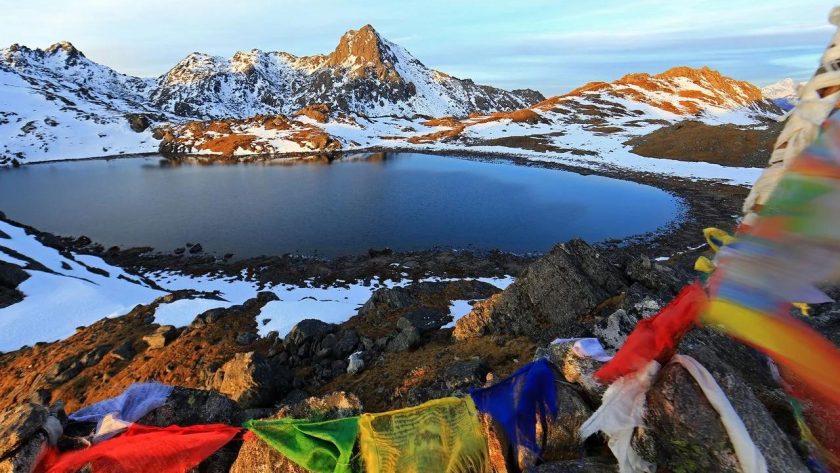
I still remember the morning I left Kathmandu for what would become one of the most memorable journeys of my life—to Gosaikunda. I had seen countless photos of the lake before, but nothing prepared me for what it felt like to actually walk toward it step by step, breathing thinner air, passing quiet forests, and slowly leaving the world I knew behind. This is not just a trek I read about or planned—it’s a journey I lived, with all its exhaustion, beauty, doubt, and wonder.
Starting the Journey: From Kathmandu to Dhunche
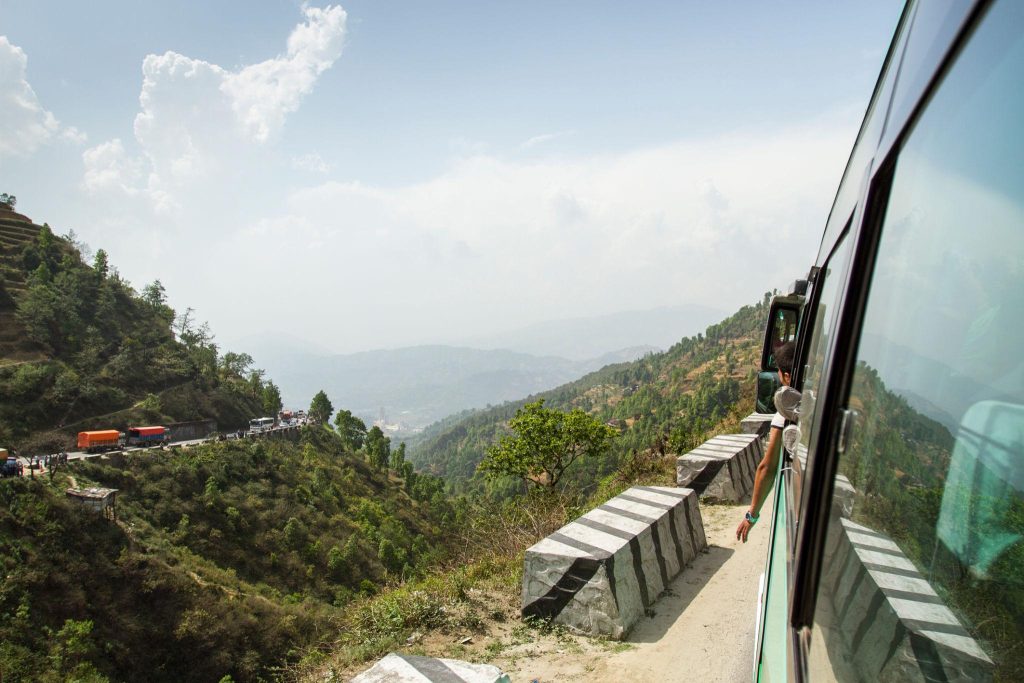
I started early in the morning from Kathmandu. The city was still half asleep when I boarded a bus heading toward Dhunche. The moment we left the valley, the road immediately began to twist and climb like it had its own personality. At first, it felt ordinary—traffic, small towns, roadside tea shops. But after a few hours, everything started changing. The Trishuli River stayed beside us like a constant companion, sometimes calm, sometimes wild and foaming.
I remember pressing my forehead against the window, watching hills roll endlessly into the horizon. Somewhere around halfway, I realized I was already leaving behind not just the city but also mental noise I didn’t even know I was carrying. By the time I reached Dhunche, the air felt noticeably colder, sharper, and cleaner.
Dhunche: The Quiet Gateway to the Mountains
Dhunche is not a glamorous place, but it has a calm honesty to it. Wooden houses, small lodges, prayer flags, and people preparing for treks—it felt like a threshold between two worlds.I stayed here for a night. The cold was stronger than I expected. My excitement made it hard to sleep, but my body knew it needed rest before the climb ahead. At the permit checkpoint for Langtang National Park, I officially entered the trekking zone. Something about that small moment felt significant, like I was signing into a different rhythm of life.
The First Climb: Dhunche to Sing Gompa
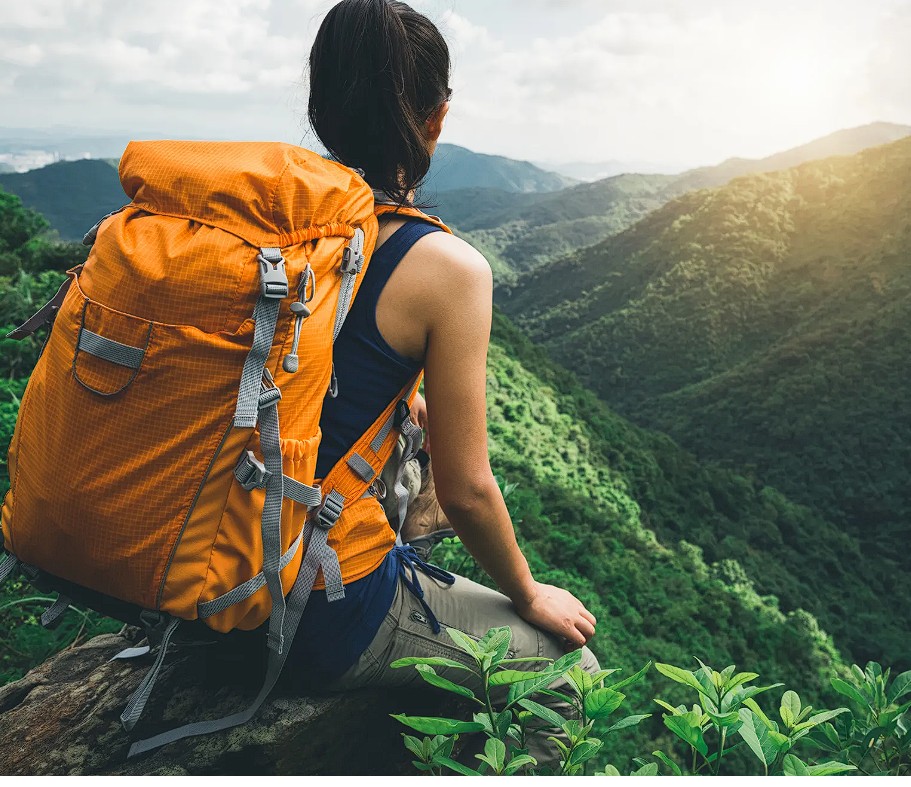
The trek began seriously the next morning. I left Dhunche with a backpack that suddenly felt heavier than it should have.The trail immediately went uphill—no warm-up, no easing in. Just steep stone steps disappearing into dense forest. I could hear birds, distant wind, and my own breathing becoming louder with every step.
The forest around me was beautiful in a quiet way—pine trees, moss-covered stones, and occasional sunlight breaking through like soft gold. But I also remember thinking, this is harder than I expected. By midday, I was sweating and tired, but something kept pulling me forward. Around late afternoon, I reached Sing Gompa (Chandanbari). There, I finally slowed down. The small monastery, the fluttering prayer flags, and the famous yak cheese factory gave the place a warm, lived-in feeling. I sat with a cup of tea, looking at the mountains in the distance, thinking how far I had already come. That night, I slept early. My legs were exhausted, but my mind felt strangely light.
Into the Thin Air: Sing Gompa to Laurebina
The next section was where everything changed. Trees began to disappear. The forest slowly opened into wide, exposed landscapes. The air became thinner, and every step required more focus. I remember stopping often, not just because of exhaustion, but because the views demanded it. Behind me, layers of mountains stretched endlessly. Ahead, the trail climbed into silence.
Reaching Laurebina felt like stepping onto a rooftop of the world. The wind was stronger, colder, and more honest than anything I had felt before. That night, I stayed in a basic teahouse. The room was simple, the blanket thin, and the cold intense. But I barely slept ,not because of discomfort, but because of anticipation. I knew the lake was close.
The Final Push: Walking Into a Sacred Landscape
The morning I left Laurebina, the sky was pale and quiet. I walked slowly, almost carefully, as if the mountain would respond to my energy.There were no trees now—only rocks, ice patches, and endless sky. Every breath felt deliberate. At some point, I started walking alone. The group ahead moved faster, but I preferred the silence. It felt like the mountain wanted me to slow down and listen. And then, after what felt like both a short and very long walk, I saw it.
First Sight of Gosaikunda: A Moment I Won’t Forget
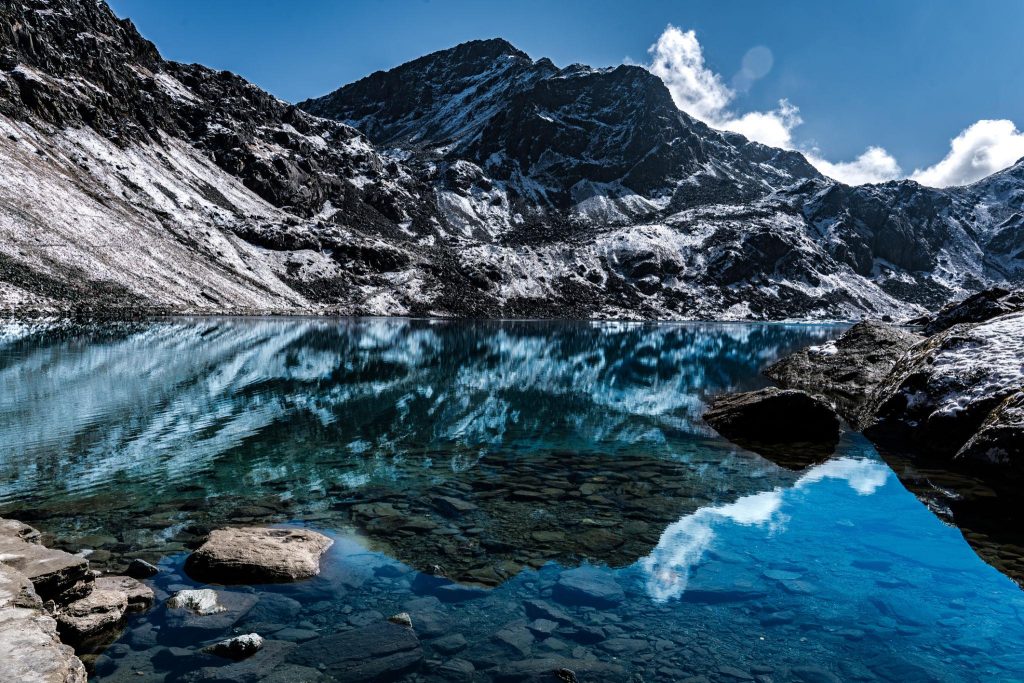
I had seen photos before, but nothing prepared me for the silence. Gosaikunda was sitting there like a secret the mountains had been keeping for centuries. The water was still, cold, and impossibly clear. Snow clung to the edges of the lake even when it wasn’t winter.
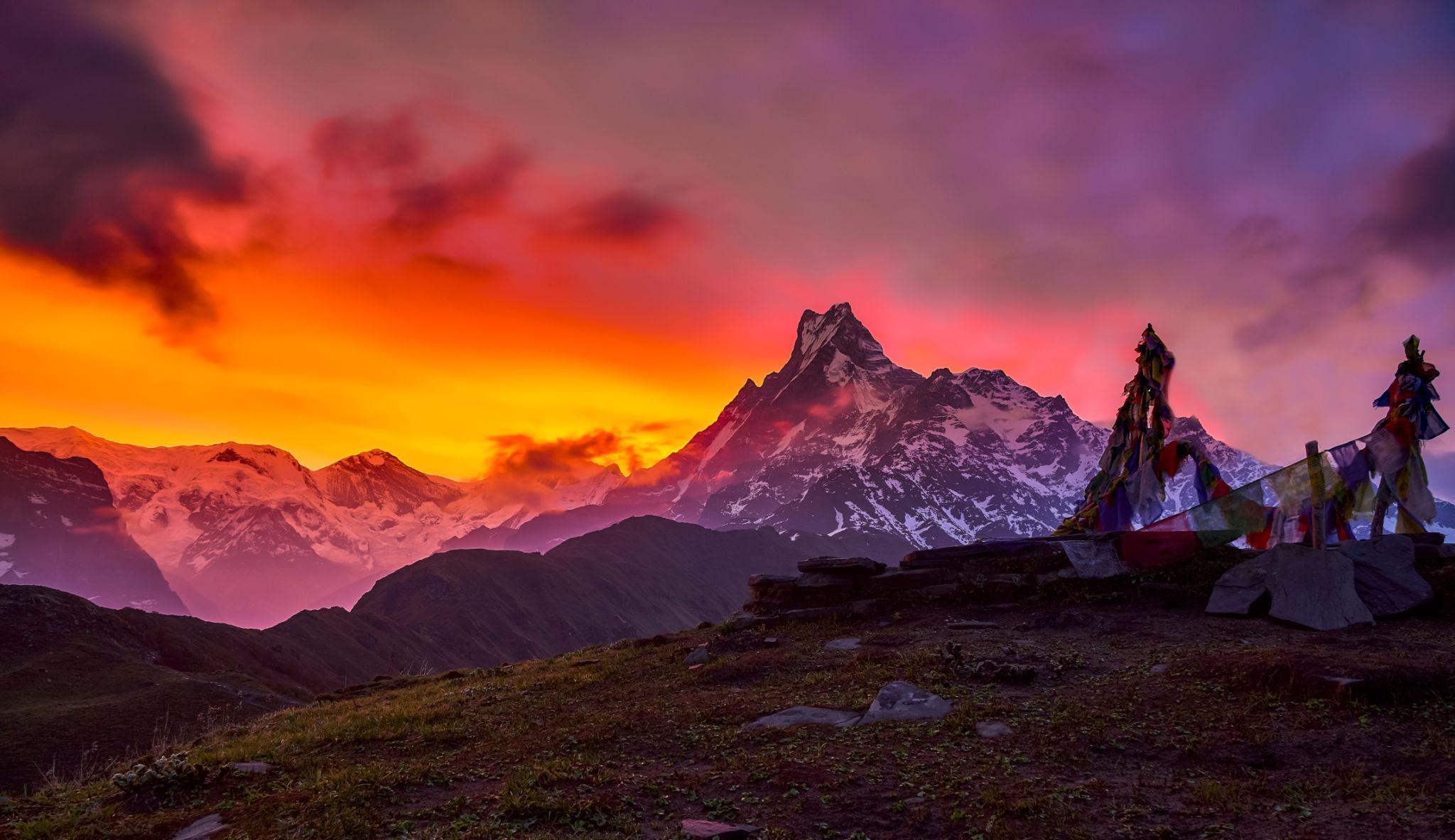
Prayer flags danced violently in the wind, as if carrying messages between earth and sky. Pilgrims sat quietly, some praying, some simply staring. I remember not speaking for a long time. There was a feeling—not dramatic or loud—but deeply peaceful. Like the lake wasn’t just a destination, but a presence.
According to local belief, this lake is sacred to Lord Shiva. Even without religious interpretation, I understood why people treat it with reverence. Places like this don’t feel ordinary. I walked around slowly, took photos, and then mostly just sat. No rush. No thoughts. Just being there.
The Cold Night at High Altitude
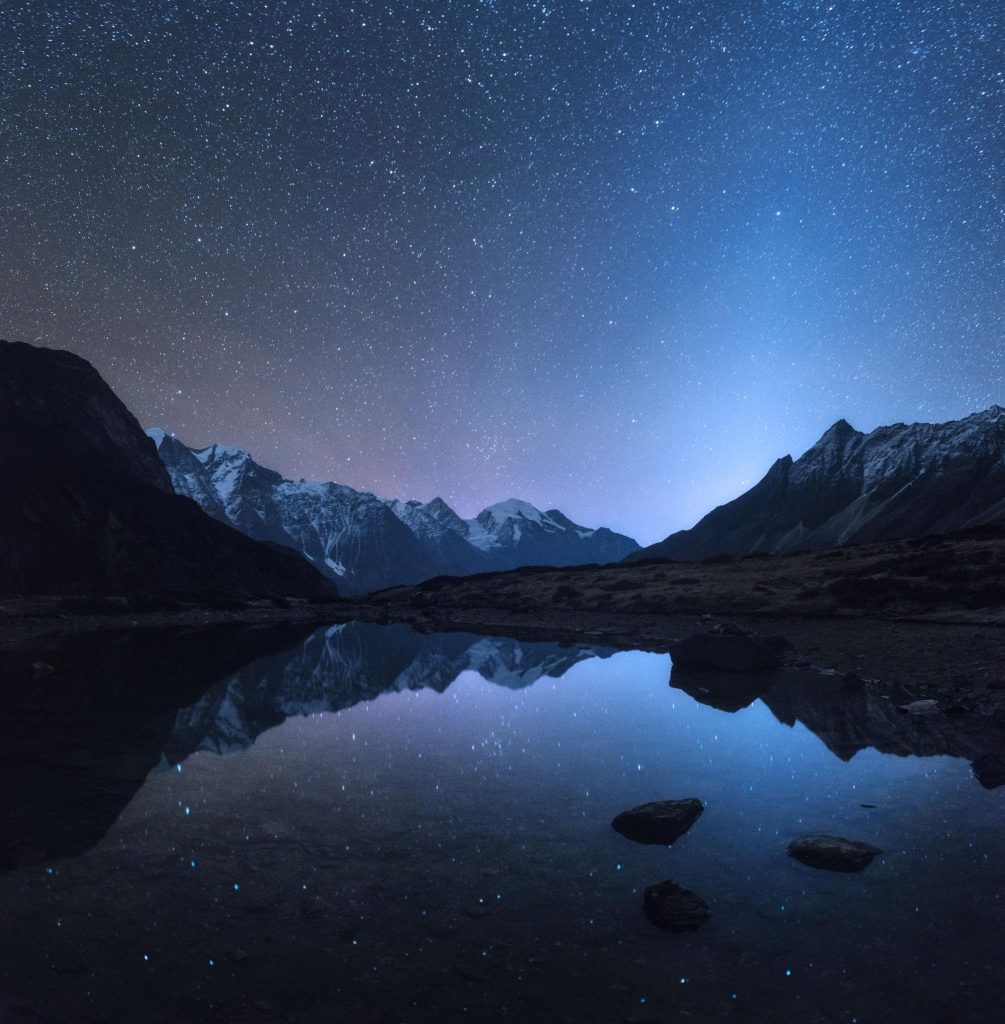
I stayed near the lake that night. The cold was extreme—far beyond what I had experienced before. Even with layers, the wind found its way through everything. But strangely, I didn’t feel uncomfortable in the usual sense. I felt small—but in a good way. Outside, the sky was filled with stars so bright it looked unreal. Inside the lodge, everyone spoke softly, as if raising voices would break something delicate. That night, I barely slept again. But I didn’t mind.
Returning Back: The Same Trail, A Different Mind
The return journey felt different. The trail was the same, but I wasn’t. Going down felt easier on the body, but heavier in emotion. I kept thinking about the lake, the silence, and how quickly we move through places that feel eternal. In Sing Gompa, I stopped again for tea. The same place felt familiar now, like an old memory instead of a waypoint.By the time I reached Dhunche, I felt like I had returned from somewhere much farther than the map suggests.
Final Reflection: What Gosaikunda Gave Me
This journey to Gosaikunda was not just about trekking distance or altitude gain. It was about rhythm—slow walking, slow breathing, slow thinking. It taught me that silence can be powerful, that discomfort can be meaningful, and that nature doesn’t need to be conquered to be understood. I went there expecting a trek. I came back with something closer to clarity. And even now, long after leaving, I still find myself thinking about that lake—still, cold, and quietly watching the sky.